BIO5 in the News
-
UAnews09/01/2010
-
Flinn Foundation08/31/2010
-
Arizona Daily Star08/30/2010
-
Arizona Engineer online08/25/2010
-
Flinn Foundation08/25/2010
BIO5 Tweets
- $9.9 million NSF grant to UA: Study genes of different wild rice species & identify genes that could improve the crop http://bit.ly/9uLe94
- Azbio Awards Dinner & Exhibition "BIOFEST" is October 27. Now is the time to nominate & celebrate achievements http://bit.ly/blguEz
- Join us! "BIO5 Science Now: Ripped from the Headlines" Fri., Oct. 22 9-11am http://bit.ly/d3G0Or #scifest
- Univ of AZ's BIO5 Institute presents "DNA Fingerprinting" at USA Sci & Eng Festival Expo Oct 23-24 in Wash DC http://bit.ly/ag2MMf #scifest
- View all BIO5 Tweets
Quick Links
High quality research products
Access, room reservations & more
Clinical & Translational Science Institute
Arizona K-12 Science Teacher Symposium
UA life science faculty & research
Life science programs
BIO5-affiliated faculty & staff talks


From processing forensic evidence to exploring brain function, to studying GPS mapping, teachers will participate in a wide variety of hands-on workshops at the 4th Annual Arizona K-12 Science Teacher Symposium Saturday, September 25, 2010 from 8 a.m. to 5 p.m. The event is presented by The University of Arizona’s BIO5 Institute, and takes place on the UA campus in the Thomas W. Keating Bioresearch Building, 1657 E. Helen St.
A recent discovery at the UA College of Medicine – that adult stem cells collected from fat tissue can be converted to cells that will grow cartilage tissue – has focused one Arizona Arthritis Center lab’s research, promising new hope for osteoarthritis sufferers.
Joyce A. Schroeder, PhD, has been awarded a US patent for a first-in-class breast cancer treatment. PMIP (which stands for Protein Transduction Domain 4, MUC1 Inhibitory Peptide) is designed to block the interaction of two proteins in cells which cause breast cancer to grow and spread. PMIP targets cancer-specific interactions and has shown no toxicity to normal cells in preclinical tests.
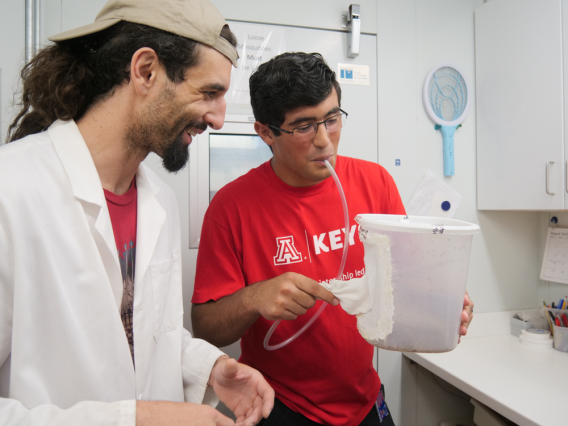
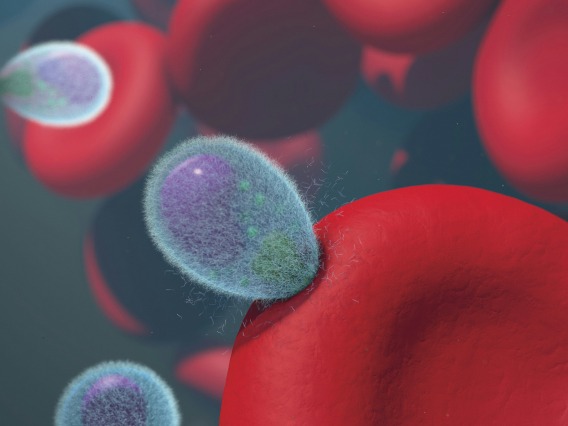
For years, researchers worldwide have attempted to create genetically altered mosquitoes that cannot infect humans with malaria. Those efforts fell short because the mosquitoes still were capable of transmitting the disease-causing pathogen, only in lower numbers.
A new clinical trial affecting the treatment of Southern Arizona patients with traumatic head injuries is under way in the University Medical Center Trauma Center. UMC is one of 17 major trauma centers around the country participating in the ProTECT III study, a five-year, $14.5 million research project funded by the National Institutes of Health.