|
|
January 8, 2008
BIO5 Director Honored by Arizona Business Leaders
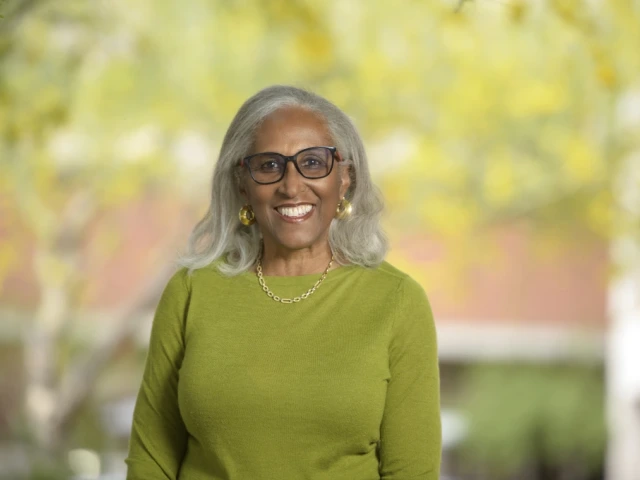
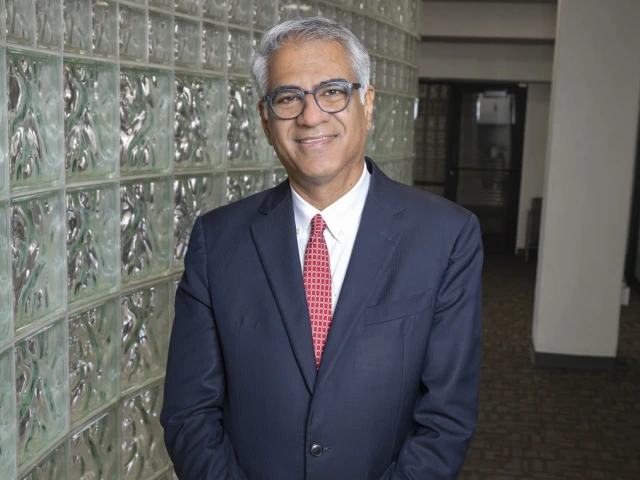
BIO5 Director Vicki Chandler received Arizona’s 2007
Ed Denison Business Leader of the Year Award on December 6, 2007. The award
recognizes her drive to focus BIO5’s research on global hunger,
disease, and the environment and to transform scientific discoveries into
real-world solutions. Dr. Chandler, a member of the National Academy of Sciences
whose own work in genetics has applications from improving crops to global
health, has brought a business orientation to BIO5 since 2004.
Dr. Chandler has sought to recruit researchers, she says, with “the
most active collaboration genes” to a pool of researchers from eight
colleges who are tackling complex scientific challenges. BIO5’s support
to date has contributed to 11 start-up companies, 118 inventions, 45 patents,
18 licenses, student internships in industry,
numerous research collaborations with companies, and hundreds of facility-use
agreements.
The award was announced at the Governor's Celebration of Innovation event in Phoenix, which is run
by the Arizona Technology Council and the Arizona Department of Commerce.
Back To Top
Knockout Mice Program Established
at UA
Gene targeting revolutionized the way
scientists use mice to study the function of genes. Also called
“knockout” technology, the technique allows scientists to create
animal models of human disease.
After the decoding of the mouse and human genomes in the early part of this
decade unearthed thousands of new genes of unknown function, knockout mice
became a prime source of information for making sense of them. Most human
genes can be studied by looking at mouse genes because the protein-encoding
genes of both are very similar. Scientists have developed hundreds of mouse
models of human ailments, including heart disease, diabetes, degenerative
brain disorders and different types of cancer.
The three scientists who developed this technique won the Nobel Prize in
Medicine this year. BIO5 member Tom Doetschman, PhD, a professor in the College of Medicine
at The University of Arizona (UA), played an active role in the mid-1980s in
the lab of one of those winners, Oliver Smithies, PhD, of the University of North Carolina Chapel Hill. While in
Dr. Smithies' laboratory, Dr. Doetschman published two papers that played a
significant role in the award. (See http://nobelprize.org/nobel_prizes/medicine/laureates/2007/adv.html
for further details on the award.)
Dr. Doetschman arrived at the UA in early 2006 from the University of Cincinnati,
bringing with him his research program and a renowned genetically engineering
mouse model program. Two years ago, the National Institutes of Health began
funding the “knockout” of every gene in the mouse genome –
all 30,000 of them. Dr. Doetschman’s lab in Cincinnati was responsible for knocking out 300 before
he relocated to Arizona
where he is continuing that work as a service to researchers statewide and
nationally.
“Since the time of Mendel, we have studied what goes wrong when a gene
is mutated. The beauty of the mouse as an experimental organism is that we
can mutate a specific gene in a pre-planned way and then learn the
consequences of that alteration at the whole animal level in a mammal with
considerable genetic similarity to humans. As a result, we can understand the
function of the gene and why specific genetic mutations can cause human
disease,” says Dr. Doetschman, who has a doctorate in biochemistry and
biophysics from the University of Connecticut and completed three postdoctoral
fellowships before establishing his lab at the University of Cincinnati.
Back To Top
Learning More About Titin and Nebulin
The average adult body has about a pound of
Titin, an essential muscle protein, yet little is
understood about its function. Henk Granzier, PhD, hopes to change that. Dr. Granzier joined the UA faculty this year, coming from Washington State University.
He is a professor in the departments of molecular and cellular biology (College of Science)
and physiology (College
of Medicine) and
currently holds the Allan and Alfie Norville Endowed Chair for Molecular Cardiovascular
Research. He also is affiliated with the Sarver Heart
Center and BIO5.
An expert in the field of heart and skeletal muscle research, Dr. Granzier uses an integrative approach to study this relatively
new protein. By looking at single molecules, single cells, tissues and
organs, he hopes to better understand the function of Titin,
including its role in heart disease and stiffening of the heart that occurs
with age.
Dr. Granzier also studies a skeletal muscle
protein, Nebulin, that plays a role in the regulation of muscle
contraction and when mutated, gives rise to the debilitating muscle disease nemaline myopathy. Both Titin and Nebulin are large
muscle proteins that were undetectable via standard protein detection tests,
and are relatively recent discoveries due to new testing methods. Dr. Granzier’s goal is to develop “a foundation
that the medical world can stand on” so that applied researchers can
begin to develop therapeutics in relation to Titin
and Nebulin.
By:
Christina Hahs
Back To Top
2nd Annual Arizona K-12 Science Teacher Symposium
Scheduled for Sat., April 5
Biosphere in a Bottle, Dracula Had Rabies, Cookin’ up Science, Dive into Arizona Rivers,
and Switched at Birth: Are Todd’s parents his biological parents? These
are a few of the workshops available to K-12 teachers during the
BIO5-sponsored 2nd Annual Arizona K-12 Science Teacher Symposium
on Saturday, April 5 from 8:30 a.m.- 4:00 p.m. at
the BIO5 Institute, 1657 E.
Helen Street on The University of Arizona campus
in Tucson.
All workshops address Arizona
science education standards.
In addition to hands-on professional development workshops, this special
event offers tours of the new BIO5 building, a lunchtime keynote speaker and
an expo that highlights UA’s resources for
K-12 science teachers. Those resources include classroom support, materials
and curricula; summer science opportunities for students; teacher research
opportunities and UA field trip opportunities.
“Schools around the state recognize that the UA and BIO5 offer a
comprehensive, coordinated, and personal outreach program for Arizona teachers. This
symposium gives elementary, middle and high school teachers a taste of the
life sciences resources available to them and their students,” says
BIO5 K-12 Outreach Director Stacey Forsyth, PhD.
For more information and to register, please click
here.
Back To Top
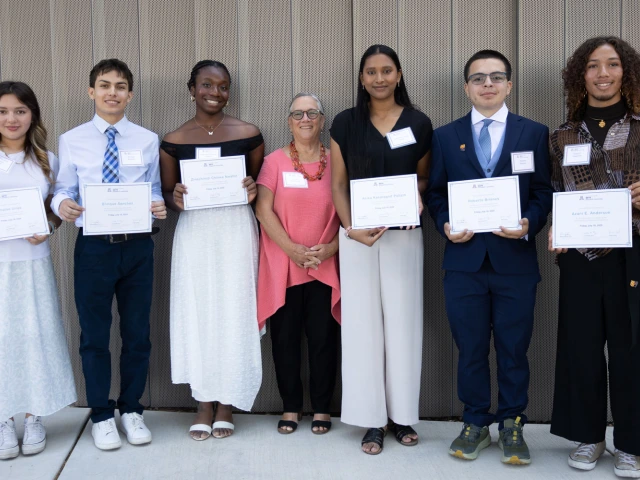
Two Receive BIO5 Innovator Awards
BIO5 Innovator Awards were announced during
the recent Graduate and Professional Student Council Student Showcase poster
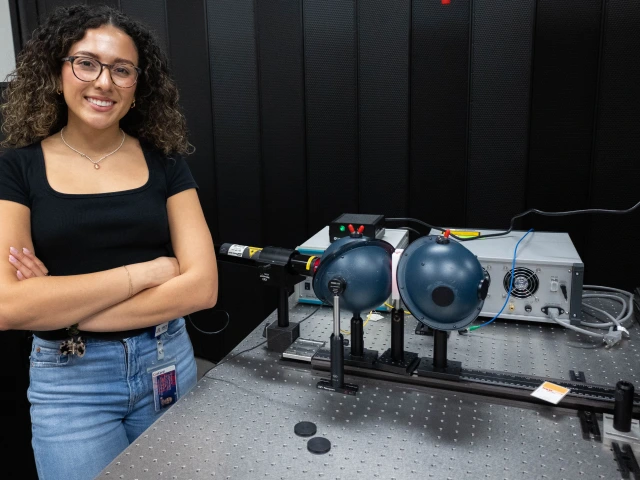
session. Anthony Tanbakuchi received the
graduate student award based on his work entitled The Multi-spectral Confocal Imaging System for Optical Biopsy in Surgery.
He works in the lab of Arthur Gmitro from the
departments of radiology and optical sciences and the Arizona Cancer
Center.
Mr. Tanbakuchi was part of a team that developed a confocal microscope that can perform real-time optical
biopsies laproscopically or endoscopically,
allowing for detection of cancerous cells without physical removal of tissue.
It is especially important in the detection of ovarian cancer because ovaries
cannot be biopsied, but are instead removed in
high-risk patients. This device is currently in clinical trials at University Medical
Center and the Southern Arizona VA
Health Care System in Tucson.
Mr. Tanbakuchi’s specific contributions to
the project were design of the lenses, lens controls, and writing the
software that transmits the images to the screen for the surgeons during the
procedure.
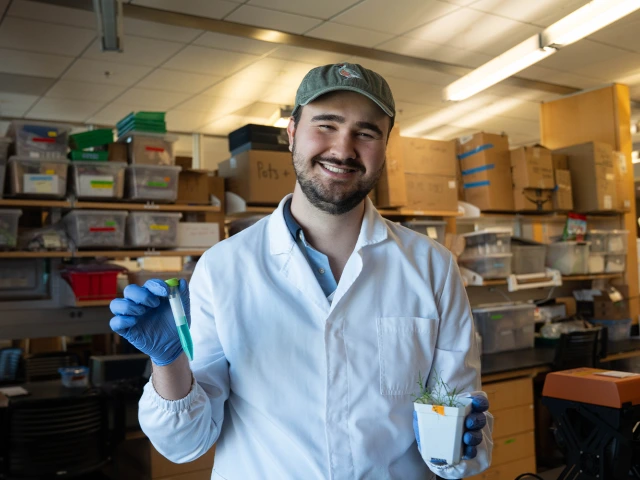
Ahmed Badran, the undergraduate recipient, was
recognized for his work entitled DNA SEER: A Sensitive Approach for the
Direct Detection of DNA. Mr. Badran’s
research has implications in early cancer detection by targeting methylated DNA sites. Now a sophomore at the UA, he has
worked in the lab of BIO5 member Indraheel Ghosh from the Department of Chemistry since his senior
year at Tucson High School.
Back To Top
TUSD Receives Funds to Improve
Biotechnology Education
Tucson Unified School District (TUSD)
received more than $99,000 in grant funds to improve biotechnology education
in the district’s Career and Technical Education programs at Palo Verde
Magnet High, Pueblo Magnet High and Tucson High
Magnet schools. The
funding is an Arizona Innovative CTE Programs award from the Arizona
Department of Education.
The district will use its grant to improve work-based learning opportunities
for students in biomedical health technology classes, said Kathy Prather, TUSD's director of Career and Technical Education. As
part of the project, BIO5, along with the university's College
of Pharmacy, College of Science
and several local biotech companies will provide TUSD students with summer
research experiences.
"Many thanks to TUSD biomedical tech teachers Andrew Lettes,
Kevin Kehl and Margaret Wilch, along with grant
writers Lorrane McPherson, David Fuller and Debbie Leonetti for their involvement with the grant
application," said Prather.
Other districts receiving grants are: Maricopa Unified School District,
engineering sciences; East Valley Institute of Technology, biomedical health
technologies; Sierra Vista Public Schools, engineering sciences; and Tolleson Union High School District, biomedical health
technologies.
Back To Top
BIO5 a Partner in Online
Science/Math Grant
BIO5 is a partner on a new $250,000
Improving Teacher Quality grant from the Arizona Board of Regents. The grant
capitalizes on The University of Arizona's telemedicine program and delivers
content-rich online courses in science and math. It is supported by
teleconferencing in order to increase the number of highly qualified science
and math teachers in Sunnyside Unified School District (SUSD).
IMPAQT (Improving Academic Quality for Teachers) partners SUSD with the
university's Office of Outreach and Multicultural Affairs, BIO5, College of Education
and College of Science. IMPAQT is a pilot project
that can be replicated throughout the state in order to reach teachers in
more rural areas.
The primary investigator is BIO5 member Ana Maria Lopez, MD, Associate Dean,
Outreach and Multicultural Affairs. Other senior personnel include: Stacey
Forsyth, PhD (BIO5), Lisa Elfring, PhD (AZ-START program, College of
Science), Debra Tomanek, PhD (Science Teacher
Preparation Program, College of Science), and Bruce Johnson, PhD (Teaching
and Teacher Preparation, College of Education).
Back To Top
Carol A.
Barnes, PhD, and Nancy A. Moran, PhD, both members
of BIO5, are among a group of 471 new fellows who will be honored at the
Fellows Forum in February during the 2008 AAAS Annual Meeting in Boston. Election as a
fellow is an honor bestowed upon AAAS members by their peers. AAAS is the
world’s largest general scientific society, and publisher of the
journal, Science. Dr. Barnes is Regents' Professor and holds the
Evelyn F. McKnight Chair for Learning and Memory in Aging. She is the
Director of the Evelyn F. McKnight Brain Institute at The University of
Arizona (UA). Dr. Moran is a Regents’ Professor in the departments of
ecology and evolutionary biology, and entomology; and Arizona Research
Lab’s Center for Insect Science at the UA.
BIO5 member Elizabeth Vierling, PhD, a professor in the UA's Department of Biochemistry and Molecular Biophysics,
gave the Richard and Elizabeth Hageman Distinguished Lecture in Agricultural
Biological Chemistry at Kansas
State University
earlier this year.
BIO5 member Richard
J. Ablin, PhD, research professor with the Department of Immunobiology in the UA's College of Medicine
and a member of the Arizona Cancer Center’s
Biology and Genetics Program, served as honorary chairperson representing the
United States at the 14th
World Congress of the International Society of Cryosurgery in November in Beijing, China.
Back To Top
BIO5 welcomes the following new faculty
members:
David Byrne, PhD, Professor
Department of Entomology, College of Agriculture and Life Sciences
Yves Carriere, PhD, Professor
Department of Entomology, College of Agriculture and Life Sciences
Melanie de Boer, PhD, Research Assistant Professor
Department of Emergency Medicine, College of Medicine
Peter C. Ellsworth, PhD, Professor, Full Specialist, and IPM
Coordinator
Department of Entomology, College of Agriculture and Life Sciences
Dawn Gouge, PhD, Assistant Specialist and Professor
Department of Entomology, College of Agriculture and Life Sciences
Indraneel Ghosh, PhD,
Associate Professor
Department of Chemistry, College of Science
Christopher Hulme, PhD, Associate Professor
Department of Pharmacology and Toxicology, College of Pharmacy
Martha Hunter, PhD, Associate Professor
Department of Entomology, College of Agriculture and Life Sciences
Nicolas Larmonier, PhD, Research Assistant Professor
Department of Pediatrics and Immunobiology, College
of Medicine
Ana Maria Lopez, MD, MPH, Associate Professor
Department of Clinical Medicine and Pathology, College of Medicine
Sudha Ram, PhD, Professor
Department of Management Information, Eller College of Management
S. Scott Saavedra, PhD, Professor
Department of Chemistry, College of Science
Daoquin Tong, PhD, Assistant Professor
Department of Geography and Regional Development, College of Social and
Behavioral Sciences
Diane Wheeler, Professor
Department of Entomology, College of Agriculture and Life Sciences
Xiaoyi Wu, PhD, Assistant Professor
Department of Aerospace and Mechanical Engineering, College of Engineering
Back To Top
2007 BIO5 Staff Additions
Sean Cadin, Accountant Associate
Steve Dix, Systems Developer
Kameron Eghtesadi, System Support
Analyst
Matt Erhart, student worker, Systems Development
Jesus Garcia, Receptionist, Senior
Daphne Gilman, Events Coordinator, Senior
Didi Johnson, Program Coordinator, Senior
Dottie May, Director of Development
Thom Melendez, Program Coordinator
Carmen Montijo, Accountant Associate
Casey Olbermann,
student worker, Events/Communications
Jose Padilla-Torres, Laboratory Facilities Manager
Kerry Redman, student worker,
Research Training & Career Development
Robert Sandoval, Keating Building
Manager
Levi Trujillo, student worker, BioME
Jessi Wilson, student worker, Events/Communications
Dena Yoder, Media Facilities Manager
Rachel Zenuk, student worker, Education Outreach
Back To Top
|
|