

BIO5 Fellowship moves marine research forward in the desert
The postdoctoral award through the BIO5 Institute supported international collaboration, new methods, and interdisciplinary conversations that advanced a University of Arizona researcher’s ocean microbiology research far from the coast.
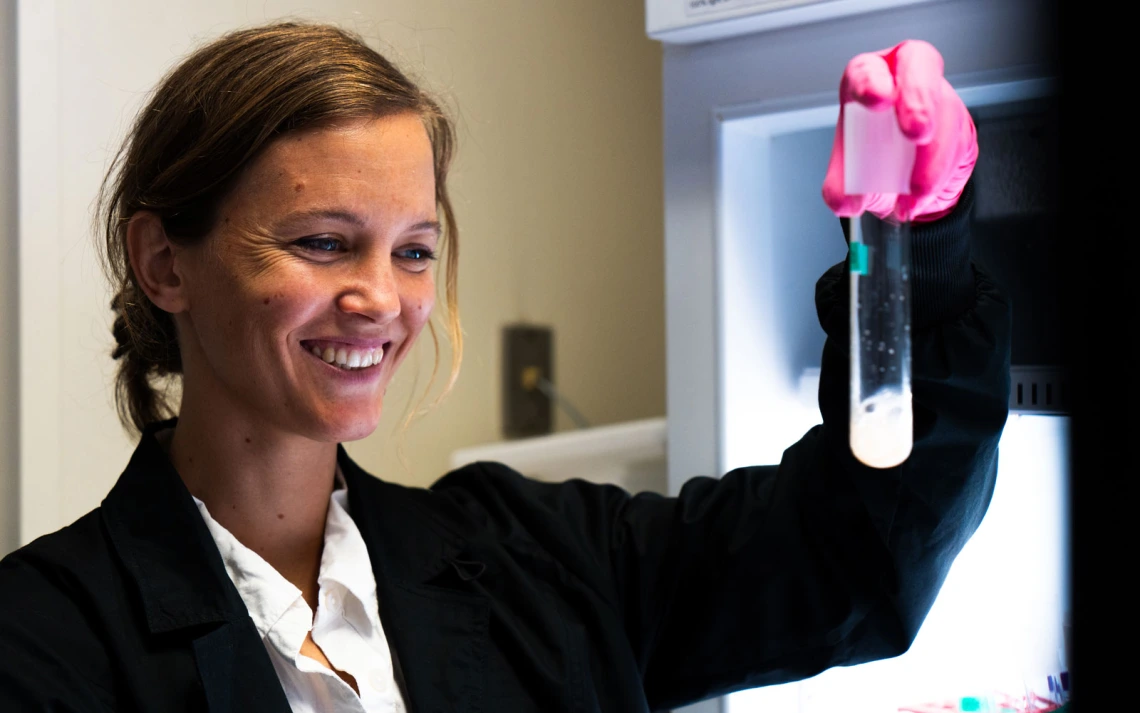
Alba Filella is a 2025 BIO5 Postdoctoral Fellow and microbial oceanographer studying how marine microbes use and recycle phosphorus.
Emilia Gazman, BIO5 Institute
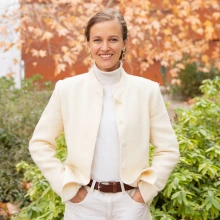
Alba Filella, PhD
Alba Filella stands in a sunny courtyard as the air buzzes with conversation. Dozens of people mingle around posters covered with colorful graphs and detailed scientific work.
Most days she’s in a University of Arizona lab running seawater samples from oceans around the world. But today, at the annual BIO5 Institute’s Research and Innovation Showcase, she’s sharing how tiny marine microbes manage one of Earth’s essential building blocks for life.
How did a microbial oceanographer end up in the middle of the Sonoran Desert? It all started with a girl in Spain collecting rocks along the shore, marveling at how much life clings on a single stone.
From ocean shores to a desert lab
That early curiosity about marine life stayed with her. As Filella moved through her academic career, she learned how the smallest details of the ocean biochemical cycles mattered on a global scale.
Now she’s a postdoctoral researcher in the lab of Solange Duhamel, an associate professor in the Department of Molecular and Cellular Biology in the College of Science. Although 500 miles inland, the Duhamel lab gives her the specialized tools to study how marine microbes use and recycle phosphorus, a nutrient every cell depends on.
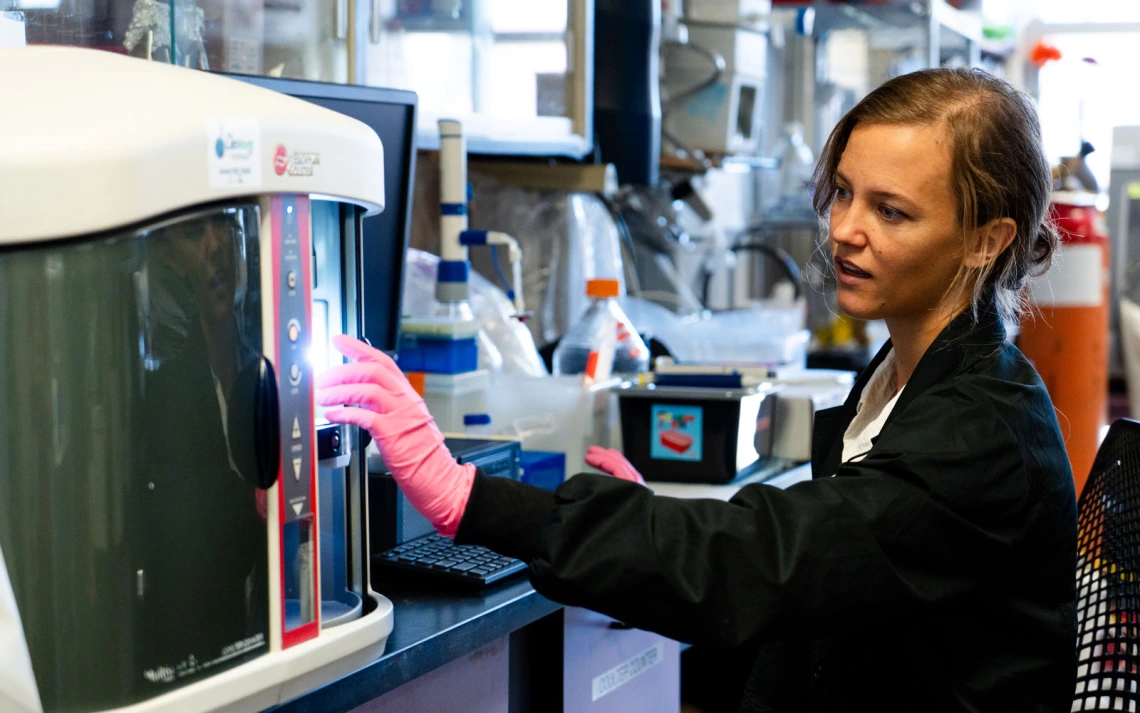
Alba Filella analyzes seawater samples in the lab of Solange Duhamel, BIO5 member and associate professor in the Department of Molecular and Cellular Biology.
Emilia Gazman, BIO5 Institute
“Phosphorus is key for most cellular processes and is especially important to store and transfer genetic information in the form of nucleic acids—like DNA and RNA—and for ATP, which is our cell’s energy molecule that fuels every reaction,” said Filella. “Life without phosphorous is just unknown!”
Filella studies polyphosphates, long strings of phosphorus that act like tiny energy reserves and help microbes cope with different environmental stresses, such as nutrient deprivation.
“My goal is to figure out what role polyphosphates play in marine planktonic organisms. They are present throughout the tree of life and still appear very enigmatic to the scientific community,” said Filella. “We see them during stress, but also when organisms grow well. That mix makes them a real mystery.”
Shifts in how microbes use nutrients can ripple into fisheries, healthy ecosystems, and even the planet’s climate. To study this, Filella draws on tools from biology, chemistry, and ocean science.
A fellowship that moves marine research forward
In her view, you can’t separate the pieces. Microbes, chemical reactions, and physical changes in the water all move together. A project like hers grows faster with the right tools and partners. Filella found that support in the BIO5 Postdoctoral Fellowship.
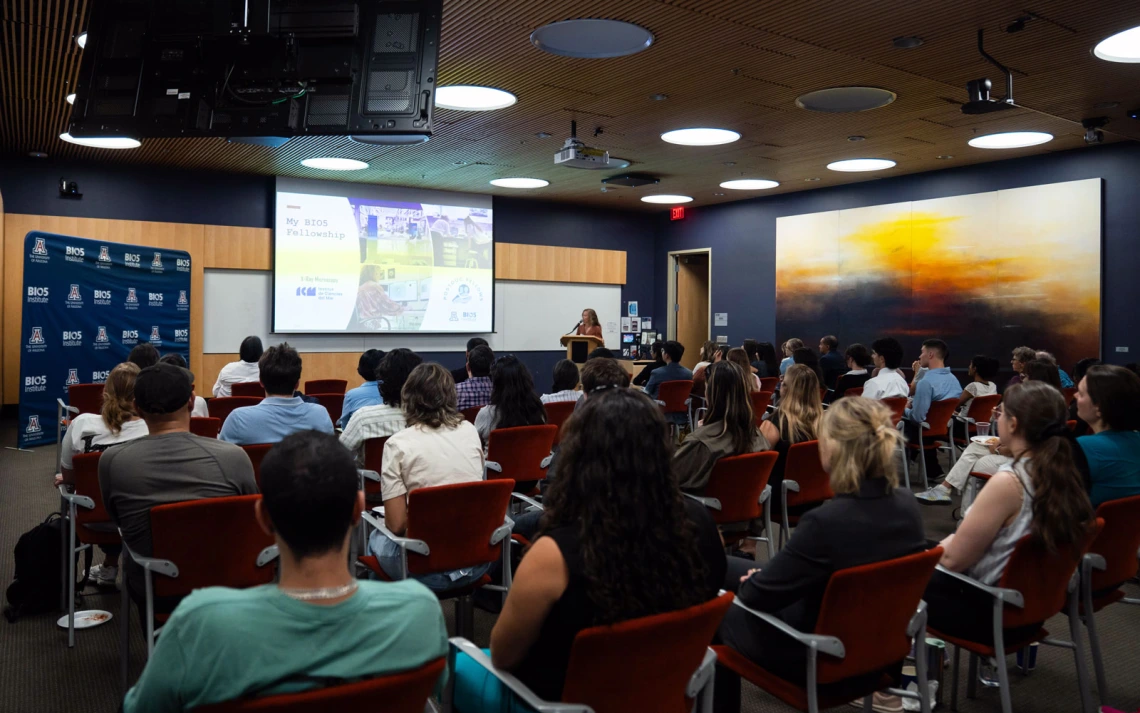
As part of the BIO5 Postdoctoral Fellowship, Alba Filella presented her project and scientific goals to the broader University of Arizona research community.
Lily Howe, BIO5 Institute
The fellowship gives early-career researchers small grants that create space for new methods and collaborations.
“Getting a competitive award like the BIO5 Postdoctoral Fellowship is great for my career development,” said Filella. “But more than that, I’ve been able to learn new techniques and talk with scientists from many areas."
Filella used her fellowship funds to travel and work at a marine institute back in Spain with an expert on X-ray microscopy, a specialized method that measures key nutrients inside single cells. That level of detail is central to her study of polyphosphates. Learning about the tiny shifts inside microbes is important for understanding how they affect large ecosystems.
“I needed funding for specific analysis and travel to move this project forward,” she said. “It would have been impossible without the fellowship—I wouldn’t have been able to do that exchange in Spain.”
Now she’s sharing the results with the broader University of Arizona community.
Finding connection far from the coast
Back in the courtyard, scientists move between posters. The Showcase draws people from environmental science, health, engineering, data science, and other areas, giving them a place to talk across fields.
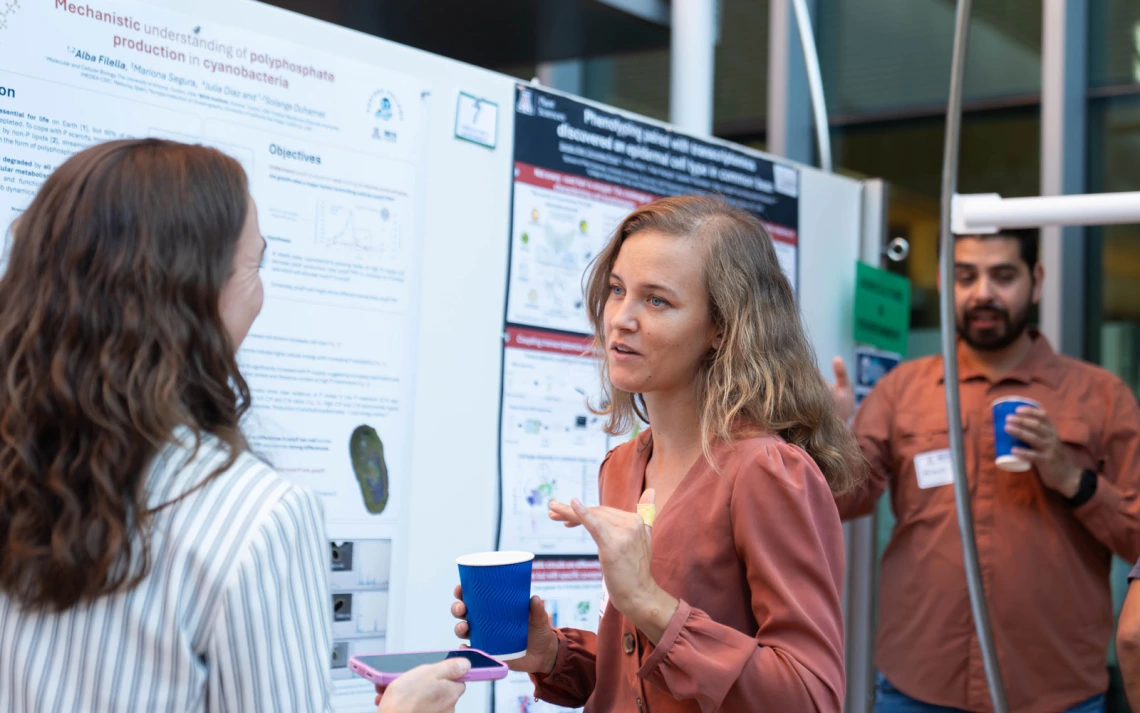
Alba Filella presenting her poster with other interdisciplinary scientists at the annual BIO5 Research and Innovation Showcase in the October 2025.
Lily Howe, BIO5 Institute
At the poster next to Filella stood another researcher studying plant roots and agriculture in southern Arizona. Their topics were far apart, but both involved phosphorus.
“I always try to stay open to completely different projects and research fields,” said Filella, “In the end, they’re all connected by the same physical, chemical, and biological principles. You never know when someone might say something that helps with your own work, and that’s why I value interdisciplinary settings like this— they help me think about what comes next.”
The curiosity that started at the water’s edge continues to guide her work, and seeing the parallels between nutrient-poor oceans and the Sonoran Desert helps her think about adaptation in cross-disciplinary ways.
Even far from the ocean, she has the tools and collaborators she needs in the desert.