

Coming full circle
How one summer in the BIO5 Institute's KEYS Research Internship helped Alexis Cruickshank-Taylor find her place in science—and inspired her to help others find theirs.
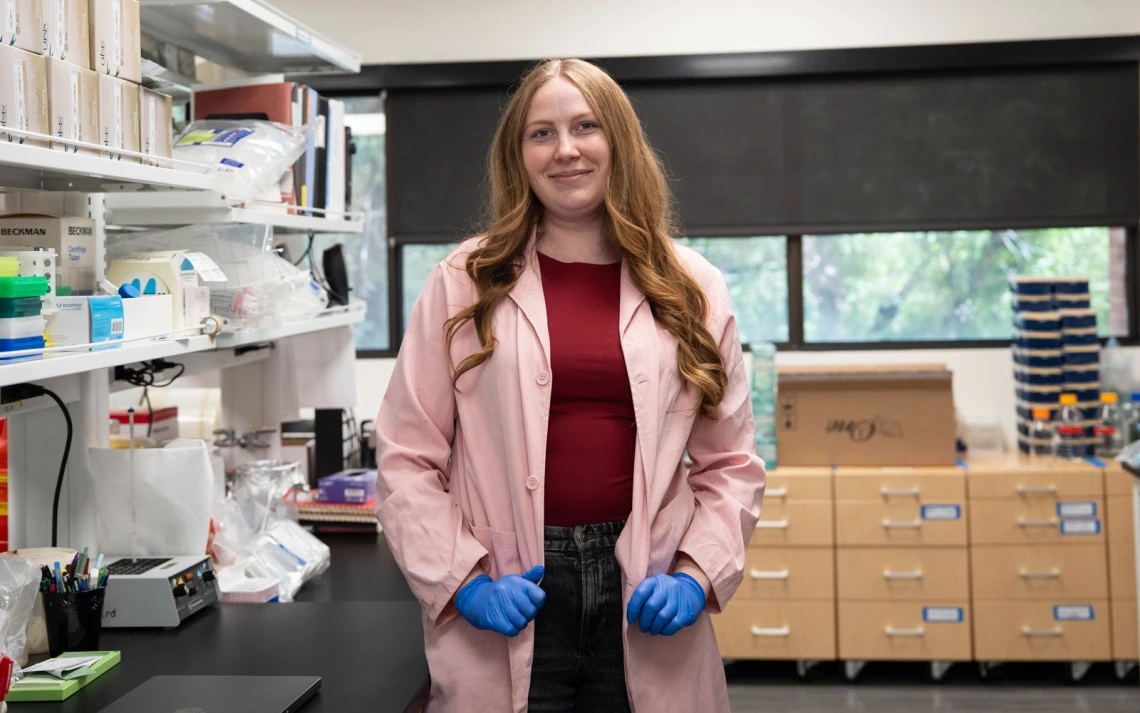
Eight years after participating in the BIO5 Institute’s KEYS Research Internship, Alexis Cruickshank-Taylor is now a doctoral candidate in pharmacology and toxicology at the University of Arizona and serves as a scientific mentor for the program.
Lily Howe, BIO5 Institute
Before Alexis Cruickshank-Taylor learned to think like a scientist, she had to believe she could become one.
Eight years later, she's helping another student discover the same thing.
Cruickshank-Taylor returned to the BIO5 Institute's KEYS Research Internship this summer as a scientific mentor, guiding a high school student through the same program that first introduced her to research.
Finding her place
Long before she stepped into a university laboratory, Cruickshank-Taylor was looking for ways to answer scientific questions. She spent her school years competing in science fairs and designing experiments at home, sometimes turning the family bathroom into a makeshift lab.
"I was always scientifically curious," Cruickshank-Taylor said. "I was doing science fair posters and projects every single year, but at some point, you have to take the next step."
The KEYS Research Internship at the University of Arizona offered that next step. But while she was excited by the opportunity, like most high school students, she wasn't sure what to expect.
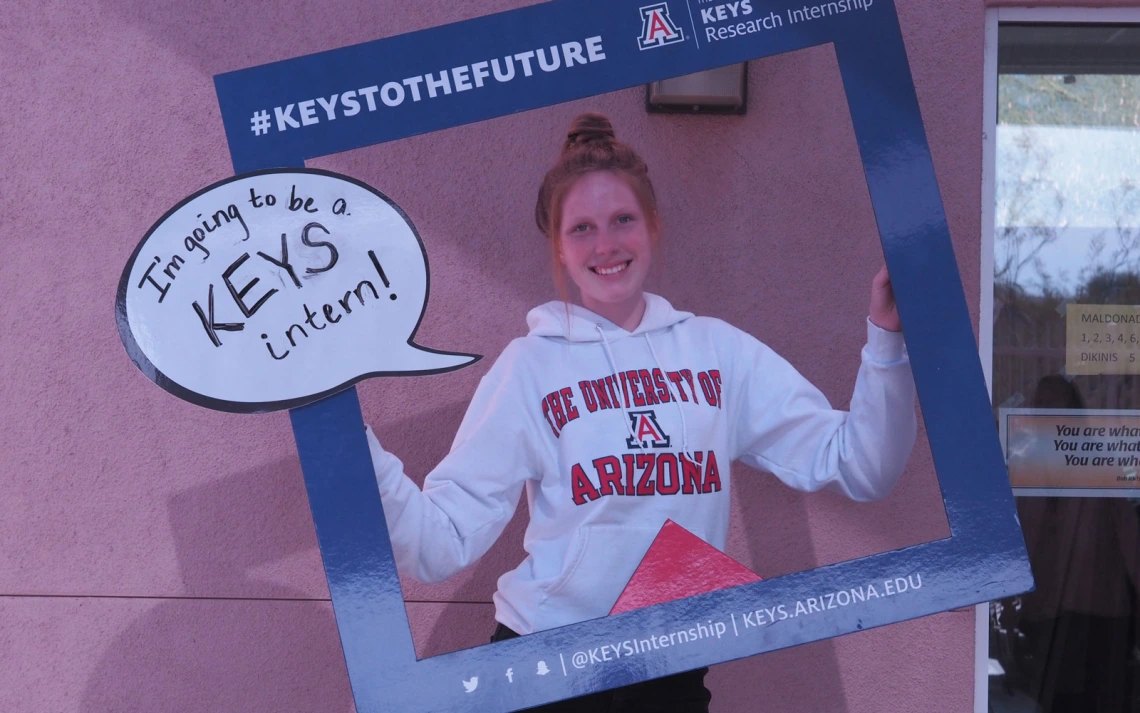
As a scientifically curious high school student, Alexis Cruickshank-Taylor joined the 2018 class of the KEYS Research Internship.
KEYS Research Internship
"I had no idea what an actual college-level laboratory would look like. I was pretty nervous and didn't know if it would be right for me," she said. "But it ended up being the right choice."
Working in the lab of Erica Eggers, professor of physiology, Cruickshank-Taylor spent her KEYS Research Internship in 2018 studying how early diabetes affects cells in the retina. More importantly, she experienced something she never had before: the chance to explore unanswered scientific questions.
Finding her voice
While analyzing images from her KEYS project, she didn't know what the data would reveal until the results came together.
"When I looked at the final graphs, I realized the importance of what I did," Cruickshank-Taylor said. "The results were impactful and can help guide future research."
For the first time, Cruickshank-Taylor realized her work could contribute to something larger than her own project.
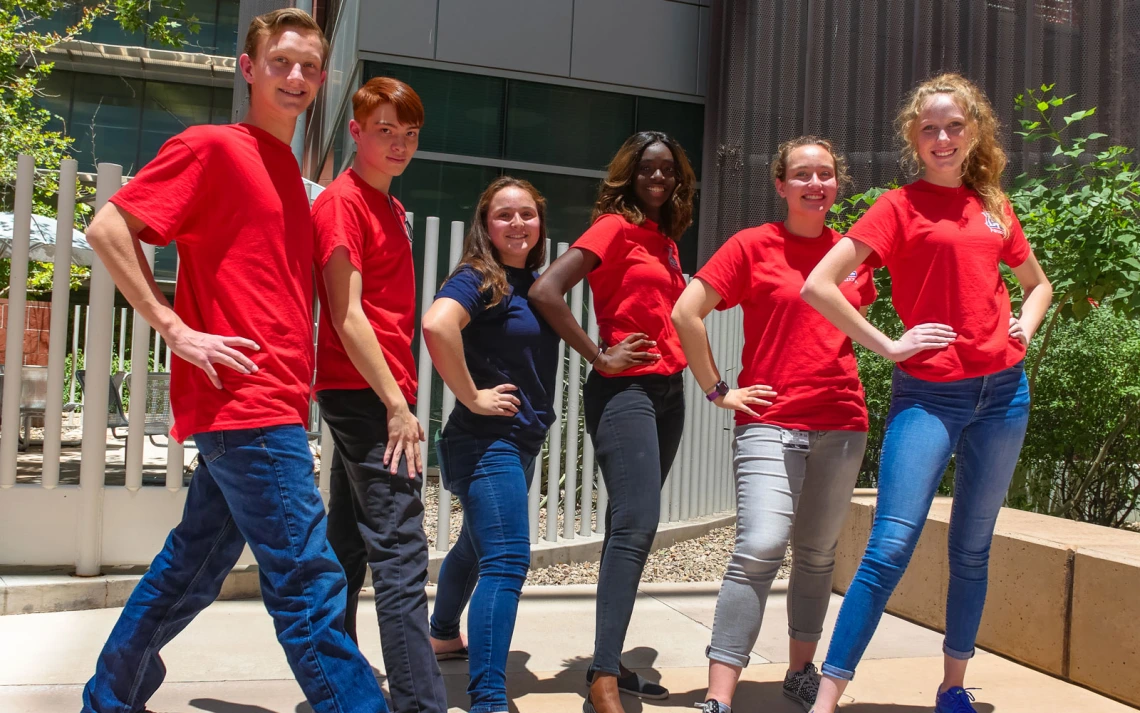
The KEYS Research Internship gave Alexis Cruickshank-Taylor (far right) the confidence and community to pursue a career in research at the University of Arizona.
Her KEYS experience gave her the confidence to ask questions, explain complex ideas and share her research with others.
That confidence stayed with her long after the internship ended.
"That project also introduced me to the concept of cellular signaling," Cruickshank-Taylor said. "Going into my undergraduate career at the University of Arizona, I decided to become a biochemistry major."
That decision set the course for the research she continues today.
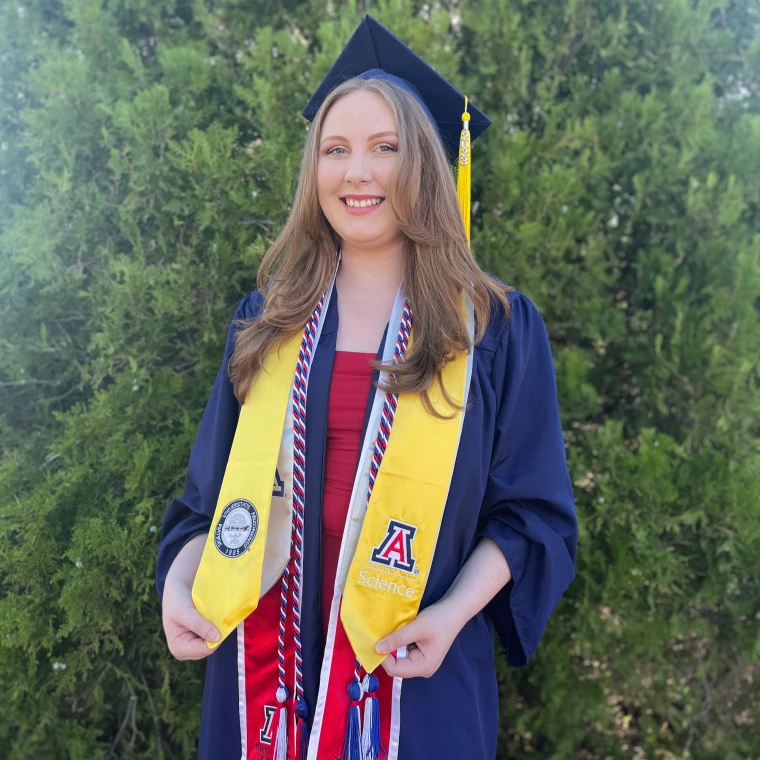
In 2023, Alexis Cruickshank-Taylor graduated with a Bachelor of Science in biochemistry from the University of Arizona.
Alexis Cruickshank-Taylor
Finding her questions
The questions that first drew Cruickshank-Taylor to biochemistry led her to the lab of Nathan Cherrington, professor of pharmacology and toxicology, where she's pursuing a doctorate studying liver disease.
Her research focuses on understanding how liver disease can change the way the body processes xenobiotics—foreign substances such as medications and environmental chemicals.
In healthy livers, proteins called transporters help move these compounds into and out of cells. Liver disease can disrupt that process, making some medications less effective or increasing the risk of side effects, depending on how they're processed by the liver. Her research aims to understand why those changes occur and ultimately help doctors diagnose liver disease earlier, enabling prompt treatment.
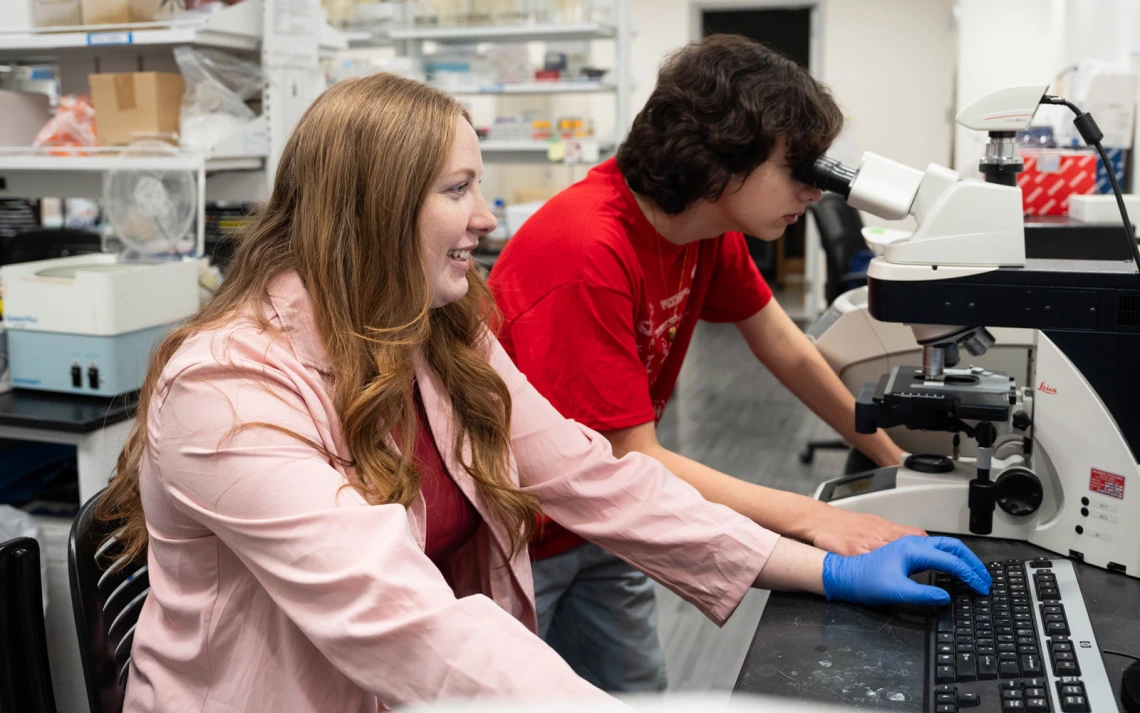
Alexis Cruickshank-Taylor (left) studies how liver disease affects the way the body processes xenobiotics—foreign substances such as medications and environmental chemicals—as a doctoral candidate in pharmacology and toxicology at the University of Arizona.
Lily Howe, BIO5 Institute
The work is driven by more than scientific curiosity. She wants to study diseases that directly affect human health and help improve patients' lives.
Eight years after arriving at KEYS unsure about research, Cruickshank-Taylor is no longer learning how to do research, she's beginning to shape it.
"Alexis has started the process of learning to develop new ideas and research questions, and then adapting those into larger hypotheses," Cherrington said. "I am very proud of the way Alexis has been able to see the broader field and how her work fits."
Cruickshank-Taylor has already co-authored four scientific publications and is working on a fifth. But for her, publishing isn't simply about adding another paper to her resume.
"When you look at published research, it's like building blocks—a foundation of research," Cruickshank-Taylor said. "Eventually my research is going to help someone else continue to solve the problems we were working on."
Passing it on
As her role in science evolved, so did her role in KEYS.
She joined the KEYS Crew in 2019, later worked as a student assistant recruiting future interns, and this summer returned as a scientific mentor.
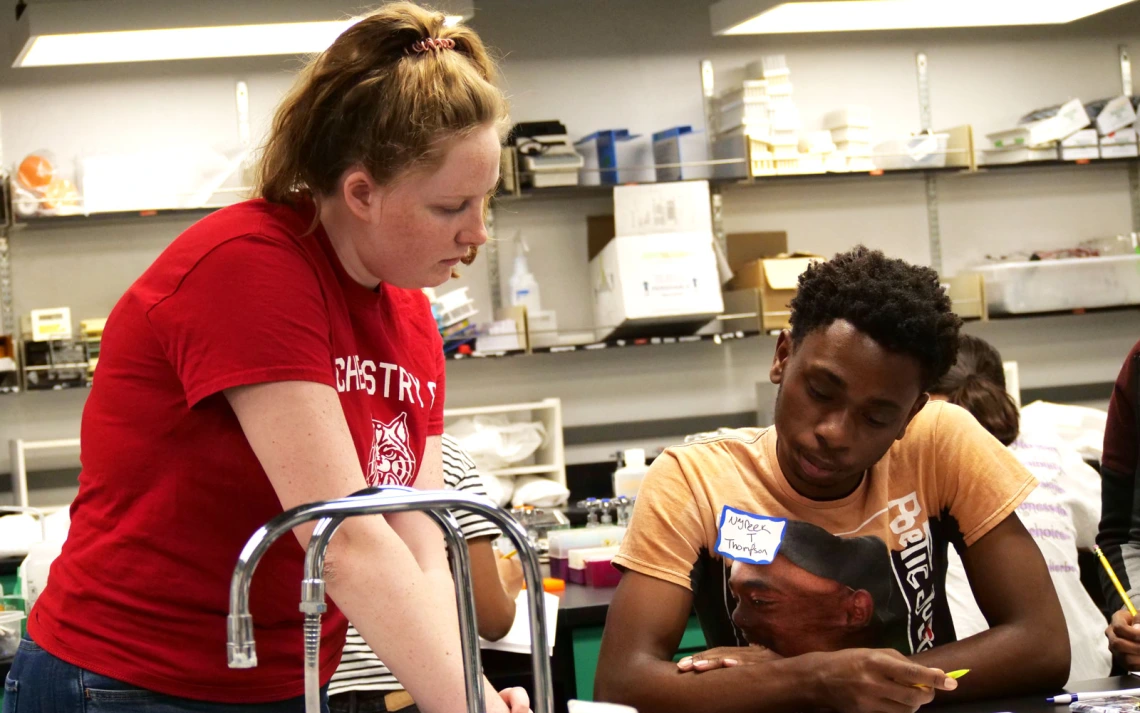
After completing the KEYS Research Internship, Alexis Cruickshank-Taylor (left) remained involved with the program as a KEYS Crew mentor and student assistant, helping recruit and support future interns.
Deanna Rodriguez, BIO5 Institute
When she met her mentee earlier this summer, she immediately recognized the nerves she once felt.
"I can see myself in my mentee," Cruickshank-Taylor said. "The first day you meet them, they're really, really nervous. I just remember that feeling as I started to work with them and put myself back in their shoes."
Mentoring another student has also reminded Cruickshank-Taylor of the people who encouraged her when she was just beginning her own journey.
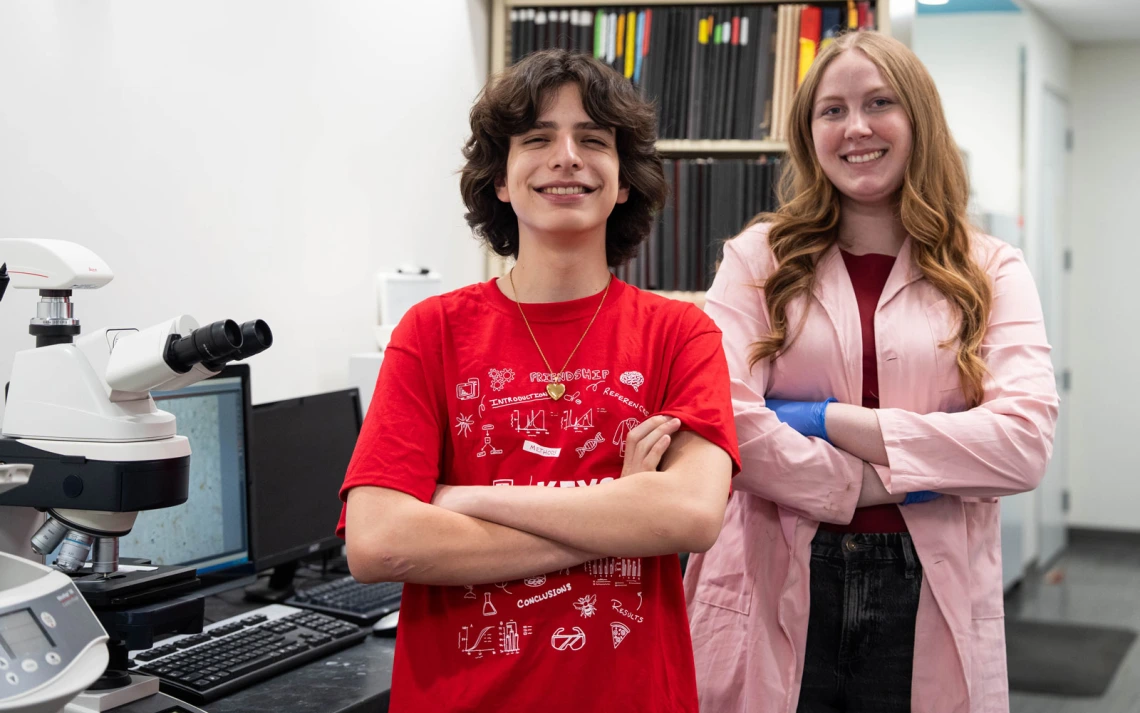
Alexis Cruickshank-Taylor (right) mentors 2026 KEYS Research Internship student Julian Amaya (left) of Douglas High School during her first summer as a scientific mentor for the program.
"A lot of what I do today is because of other people," she said. "My high school science teacher was a huge mentor to me."
That support continued long after high school. She credits the researchers who welcomed her into their labs, her KEYS mentors and the faculty who encouraged her throughout college and graduate school.
"The coolest part of KEYS is that they continue being your family throughout this time," Cruickshank-Taylor said. "You'll forever have a cheerleader and people who are interested in everything that you do. They'll keep pushing you to keep reaching your goals in life."
Now, she's providing that same encouragement to the next generation of KEYS students.
"As KEYS celebrates 20 years, stories like Alexis's reflect the program's long-term impact,” said Kelle Hyland, program manager of the KEYS Research Internship. “These early research experiences provide the foundation that allows students to see themselves as researchers and obtain the knowledge, skills and self-confidence to pursue educational and career pathways to achieve their goals."
For Cruickshank-Taylor, that foundation began with one summer in a research lab. Today, she's helping another student take that first step.