

What happens when you trust high school students with research?
For 20 years, faculty mentors in the BIO5 Institute's KEYS Research Internship have welcomed Arizona high school students into their laboratories, where they've found that students arrive ready to contribute from day one.
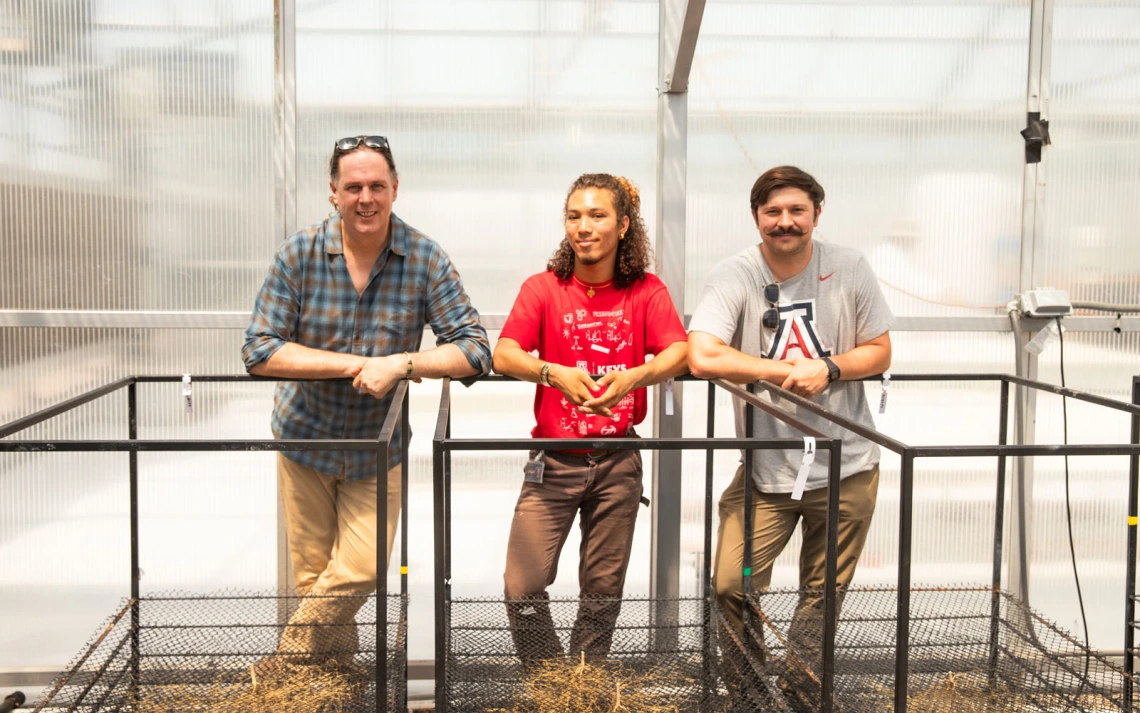
KEYS intern Azani Anderson (center) continues to work in Alexander Bucksch's (left) lab as an undergraduate researcher after his 2025 KEYS internship.
Lily Howe, BIO5 Institute
Seven weeks isn't long enough to master scientific research. But it's enough to become part of it.
For both new and long-time mentors of the BIO5 Institute's KEYS Research Internship, that's what sets the program apart. Students quickly become active members of the research team. For many mentors, those first seven weeks are only the beginning of relationships that continue long after the summer ends.
Preparing students for the lab
When Pascale Charest welcomes a KEYS intern into her laboratory each summer, she can expect them to be part of the lab from day one.
"I only mentor high school students through KEYS," said Charest, an associate professor of molecular and cellular biology. "The program takes care of all the preparation, so when students arrive, they're ready to jump into the work."
Before entering a research lab, KEYS students complete intensive training in biotechnology, data science and science communication, allowing mentors to spend less time teaching laboratory basics and more time helping students think like scientists.
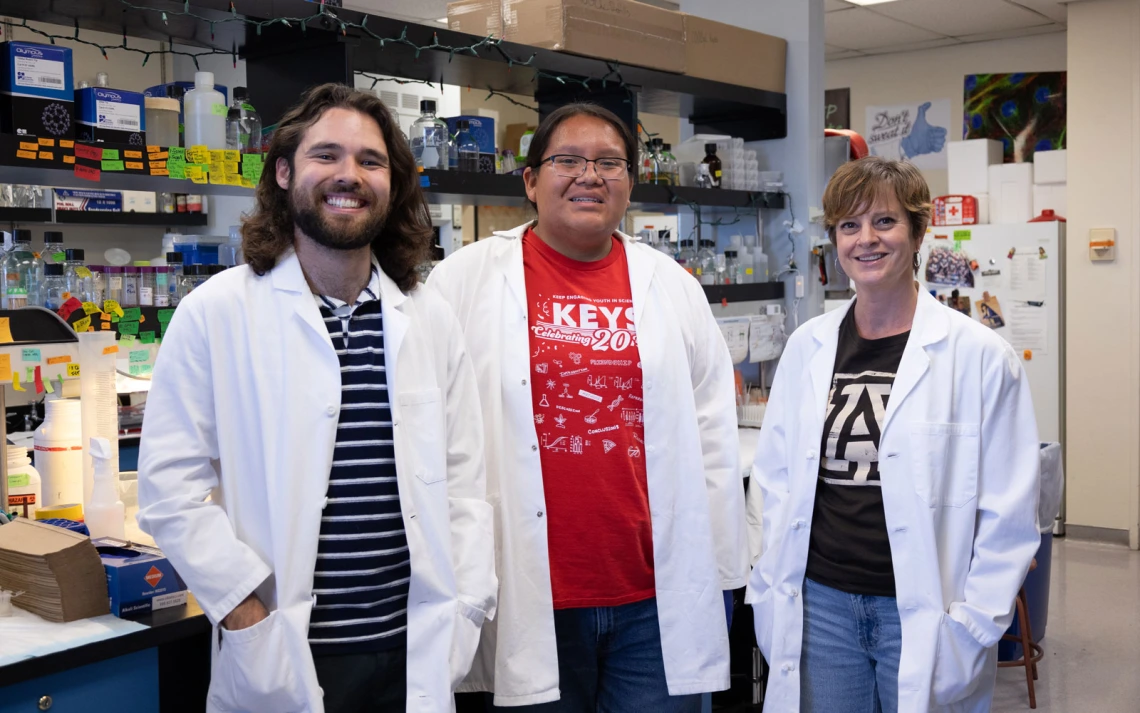
Pascale Charest (right) has served as a KEYS faculty mentor for more than a decade and values the program's preparation of students, who arrive ready to contribute to research from day one.
Caroline Bartelme, BIO5 Institute
"At first, they're understandably intimidated," said Charest, a member of the BIO5 Institute. "By the end of the summer, they're comfortable in the lab, asking questions and thinking like scientists."
Fresh perspectives, new questions
Students treated as researchers often see problems differently.
For Haiquan Li, an associate professor of biosystems engineering, that's what makes mentoring KEYS students so rewarding. His lab uses artificial intelligence and machine learning to solve complex problems, and he encourages students to explore ideas independently rather than simply follow instructions.
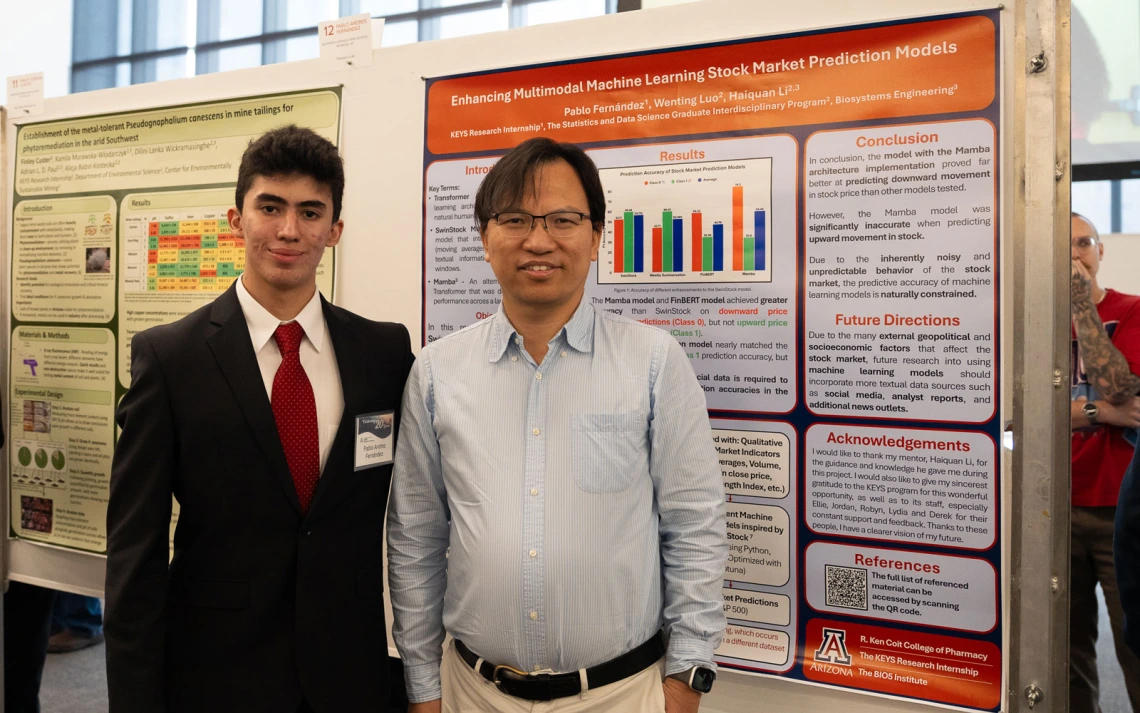
Haiquan Li (right) has mentored KEYS students since 2023, including several in the virtual cohort, such as 2026 intern Pablo Fernandez (left).
Lily Howe, BIO5 Institute
One of those moments came in 2024, when KEYS intern Shivang Parmar noticed something unexpected while testing an artificial intelligence model in Li’s lab. He discovered that the model's performance changed depending on the size of the images it analyzed—a detail the research team hadn't considered. That observation led the team to investigate further, shaping future work.
"It's often the students who ask the questions we haven't thought of asking," Li, a member of the BIO5 Institute, said. "They approach problems differently because they aren't limited by the same assumptions."
Mentorship goes both ways
The benefits of KEYS doesn't stop with the students. Mentoring changes the researchers, too.
Alexander McGhee, an assistant professor of biomedical engineering and BIO5 Institute member, said mentoring KEYS students strengthens his lab in unexpected ways. Students gain experience working alongside researchers, while graduate students learn how to explain their work and guide younger scientists.
"Teaching someone else forces you to think more deeply about your own work," McGhee said. "It's valuable for everyone involved."
Alexander Bucksch, an associate professor of plant sciences and BIO5 Institute member, has seen the same dynamic. As graduate students mentor younger researchers, they become stronger scientists and educators at the same time.
"Teaching and research feed into each other," Bucksch said. "It is really a win-win for everyone."
Beyond the summer
For many mentors, the relationships that begin during KEYS continue long after the internship ends.
Azani Anderson joined the Bucksch lab as its first KEYS intern in 2025. After the internship ended, he asked to return as an undergraduate researcher.
"The minute he asked to come back to the lab, it was clear he was driven to accomplish more than during the short internship," Bucksch said.
Since then, Anderson has taken on increasingly complex computational work, become more independent and begun developing ideas of his own. This fall, he'll continue that work as he begins his undergraduate studies at the University of Arizona.
A similar story unfolded in McGhee's lab. After participating in KEYS in 2025, Melayna Matheson chose to continue her research as an undergraduate. She'll remain in the McGhee lab this fall while beginning her studies in biomedical engineering at the University of Arizona.
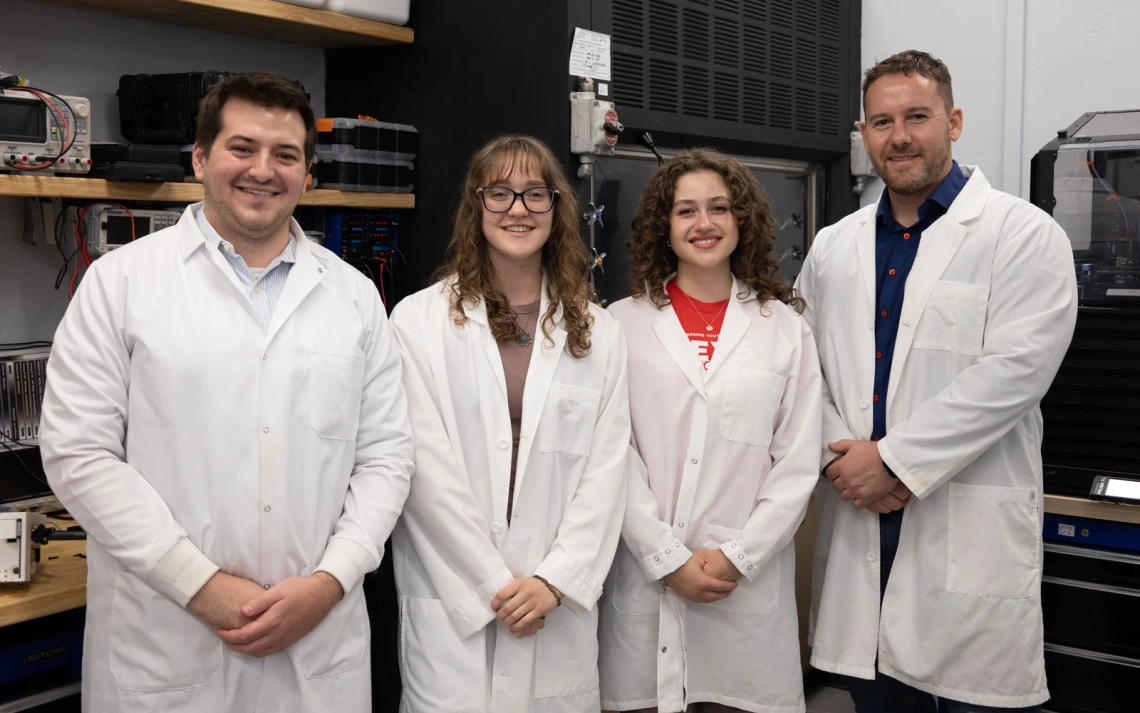
Melayna Matheson (second from left) was Alexander McGhee ‘s (right) first KEYS intern in 2025 and continues to work in his lab as an undergraduate researcher.
Deanna Rodriguez, BIO5 Institute
“As a mentor, I try to match my mentees’ level of curiosity, and Melayna makes that easy—she’s interested in everything,” said McGhee. “She’s an awesome student, and that’s why I’ve been so excited to keep her in the lab.”
Those stories aren't unusual. Charest still keeps in touch with the first KEYS intern she mentored nearly a decade ago. After attending the University of Arizona and continuing to work in Charest's lab, that student now works for a biotechnology company in San Diego. Others have returned to her lab as undergraduate researchers before moving on to graduate school and careers in science.
Li has seen the same pattern. Since becoming a KEYS mentor in 2023, several of his former interns have continued working in his lab. He estimates their contributions rival those of his graduate students, something he sees as evidence of what motivated high school students can accomplish when given meaningful responsibility.
For 20 years, faculty have trusted high school students with meaningful scientific work. That trust has strengthened research teams while helping build Arizona's next generation research workforce.