

For Flinn Scholars, college begins with research
The BIO5 Flinn Scholar Research Experience connects nine first-year students with mentors across the University of Arizona to pursue scientific projects shaped by their interests.
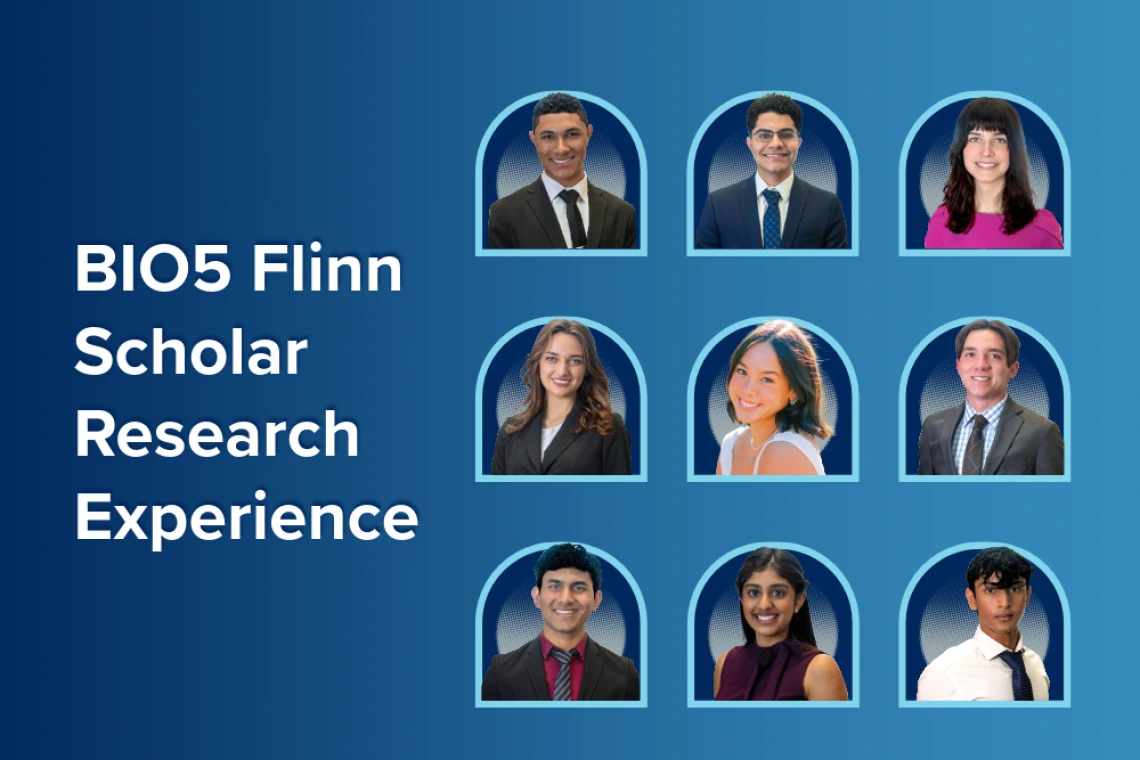
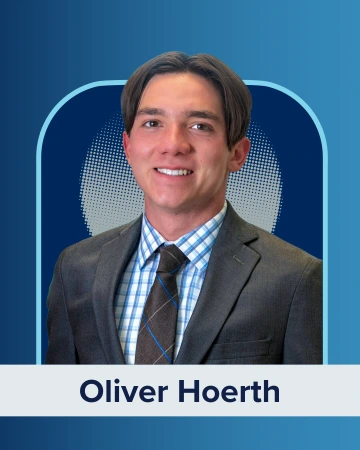
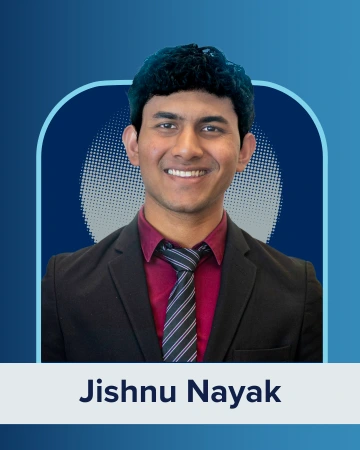
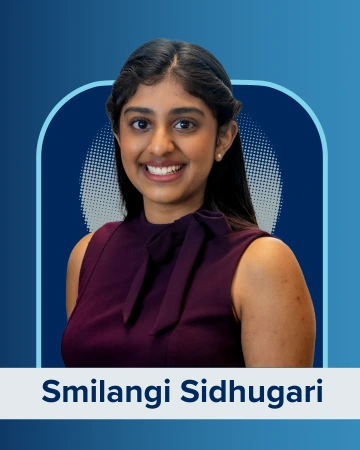
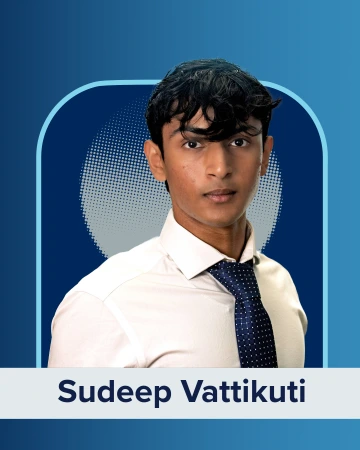
The students participating in the 2025 - 2026 BIO5 Flinn Scholar Research Experience are: (left to right, top to bottom): Mario Aleman, Adam Bedeir, Tae Cooper, Roselyn Dorrell, Malia Hirasa, Oliver Hoerth, Jishnu Nayak, Smilangi Sidhugari, and Sudeep Vattikuti.
For a select group of Flinn Foundation scholars, their first year at the University of Arizona begins with immersive research — an experience rarely available to first-year students.
Through a partnership with the University of Arizona Office of Research & Partnerships and the W. A. Franke Honors College, the BIO5 Institute places students into research environments of their choice across campus. Over the course of a semester, they work alongside mentors on projects aligned with their interests.
“Getting into research, working alongside a faculty mentor, and learning to ask real questions, in the first year of college shapes how students see themselves and what they believe is possible,” said Vignesh Subbian, interim director of the BIO5 Institute. “The BIO5 Flinn Scholar Research Experience reflects the University of Arizona's commitment, as a public Research I land-grant institution, to make that kind of transformative opportunity accessible to Arizona students.”
Now in its third year, the BIO5 Flinn Scholar Research Experience is a structured, paid program that gives Flinn Scholars, Arizona students selected through a highly competitive process, early access to hands-on research while building foundational skills and contributing to active scientific work.
"Undergraduate research remains a signature experiential learning opportunity accessible to Franke Honors Wildcats," said Karna Walter, assistant dean for student engagement at the W.A. Franke Honors College. "We are thrilled to continue this partnership with BIO5, which offers early connection to mentorship from highly accomplished researchers and equips talented Flinn Scholars with additional foundational skills that will serve them far into their bright futures."
A defining feature of the program is that students select their faculty mentor, who must be a University of Arizona researcher, and help shape their project from the outset. The goal is to accelerate student growth by immersing them in real research at the very start of their college experience.
Across the university, that approach leads to a wide range of student-driven projects spanning disciplines and research areas.
Learn about the research projects of 2025-2026 BIO5 Flinn Scholar Research Experience cohort.
Imaging & Diagnostics
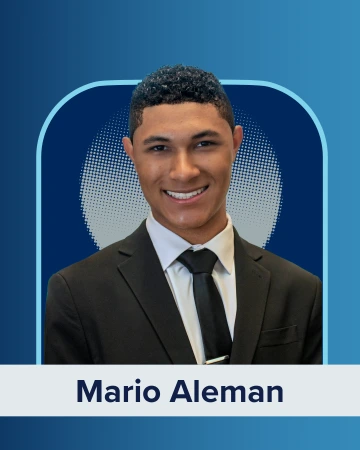
Mario Aleman, medicine major
Knee osteoarthritis can cause painful inflammation and structural damage that are not always easy to measure consistently on MRI. Mario Aleman is helping refine that process by analyzing imaging features such as bone marrow lesions, effusion-synovitis and Baker’s cysts, then comparing his results with expert clinical readings to improve reliability.
Aleman works in the lab of C. Kent Kwoh, professor emeritus of medicine at the University of Arizona Arthritis Center, where researchers use advanced imaging to track how osteoarthritis develops and progresses.
Through this work, he is strengthening his ability to interpret clinical imaging data while building computational skills used in musculoskeletal research.
Biomechanics & Orthopedics
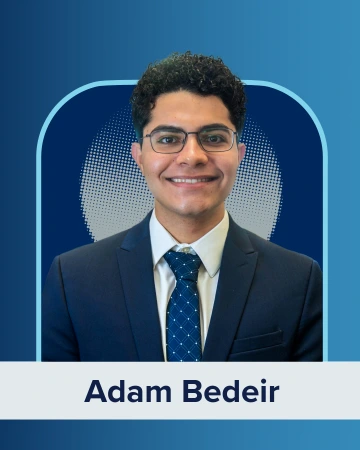
Adam Bedeir, physiology and medical sciences major
Flat foot, a degenerative condition caused by weakening ligaments, can be difficult to detect and track early. Adam Bedeir, 2023 alumni of the BIO5 Institute’s KEYS Research Internship, is addressing that challenge using shear wave elastography, an ultrasound-based technique that measures tissue stiffness, to compare how ligaments behave in healthy patients and those with the condition.
Bedeir works in the lab of L. Daniel Latt, associate professor of orthopedic surgery and biomedical engineering and BIO5 faculty member at the University of Arizona, where the team develops tools to improve diagnosis and monitoring of foot and ankle conditions.
He has contributed to organizing and analyzing elastography data and is helping translate those findings into a scientific abstract.
Quantum Engineering
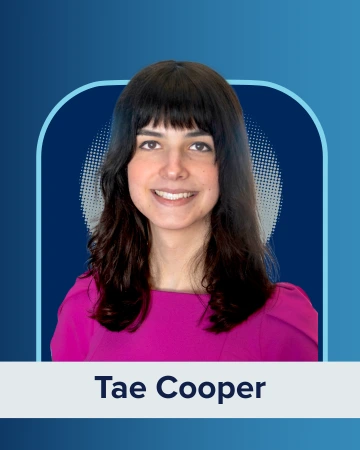
Tae Cooper, electrical and computer engineering major
Quantum communication depends on entangled particle pairs, but maintaining their stability remains a major challenge. Tae Cooper is working to improve how these pairs, known as EPR pairs, are generated and transmitted by studying optical systems that support reliable quantum signals.
Cooper is part of the lab of Shelbi Jenkins, assistant professor of electrical and computer engineering at the University of Arizona, where researchers are advancing technologies for secure communication and quantum networking.
Her work has focused on building and troubleshooting optical setups, including fiber connections and polarization control, while gaining experience with key lab instrumentation.

Space & Robotics
Roselyn Dorrell, aerospace engineering major
Robots designed for space exploration must operate in extreme environments where repairs are not an option. Roselyn Dorrell is exploring how self-healing materials and modular robotics could allow machines to recover from damage and continue functioning.
Dorrell works in the SpaceTREx Lab led by Jekan Thanga, associate professor of aerospace and mechanical engineering at the University of Arizona, where the team develops autonomous systems for space missions and other high-risk environments.
Her research evaluates design strategies that improve system resilience, focusing on how modular components and material properties can extend mission lifespans.

Policy & Society
Malia Hirasa, political science and business management major
Mass detention systems have been used by governments for decades, but how these practices spread and evolve is less understood. Malia Hirasa examines historical case studies to trace how policies, including those used in British colonial camps, have been adapted across regions.
Hirasa works with Alex Braithwaite, distinguished professor and director of the School of Government & Public Policy at the University of Arizona, whose research focuses on political violence and global patterns of repression.
Her work contributes to defining and contextualizing detention systems, clarifying how terminology and historical precedent shape present-day understanding.
Biomedical Devices
Oliver Hoerth, biomedical engineering major
Monitoring bone healing typically requires periodic imaging, which can miss important changes between scans. Oliver Hoerth is developing a miniature photonic sensor that could be implanted to track healing in real time using light.
Hoerth works in the lab of Philipp Gutruf, associate department head of biomedical engineering and BIO5 faculty member at the University of Arizona, where researchers design implantable devices that continuously monitor the body.
He has identified key optical markers of bone healing and narrowed them to specific wavelengths that could enable continuous, minimally invasive monitoring.
Public Health & Society
Jishnu Nayak, physiology and medical sciences major
Mental health outcomes and dementia risk are shaped by more than biology alone. Jishnu Nayak, 2024 alumni from the BIO5 Institute’s KEYS Research Internship, studies how factors such as discrimination, race and socioeconomic conditions influence patterns of depression, anxiety and cognitive decline across populations.
Nayak works in the lab of Young Choi, assistant professor of sociology at the University of Arizona, using data from the All of Us Research Program to examine structural drivers of health disparities.
His work focuses on identifying measurable links between social conditions and long-term cognitive and mental health outcomes across diverse populations.
Immunology & Vaccines
Smilangi Sidhugari, medicine major
Vaccines often become less effective with age as the immune system weakens. Smilangi Sidhugari is investigating how activating innate immunity, the body’s first line of defense, can strengthen vaccine responses and improve protection.
Sidhugari works in the lab of Prabhu S. Arunachalam, assistant professor of immunobiology and BIO5 faculty member at the University of Arizona, where researchers study immune responses to infection and vaccination.
Her work focuses on measuring cytokine responses to mRNA and influenza vaccines, helping compare experimental results with known human immune responses.
Imaging & Perception
Sudeep Vattikuti, neuroscience and cognitive science major
Why are abnormalities often easier to detect in 3D breast scans than in traditional 2D images? Sudeep Vattikuti is exploring that question by designing visual search experiments that test how people identify lesions across different imaging formats.
Vattikuti works in the lab of Stephen Adamo, assistant professor of cognition and neural systems at the University of Arizona, where researchers study attention and perception in medical image interpretation.
He is building experiments using open-source analytical tools, while developing computing and experimental design skills used in cognitive research.